Wednesday, June 24, 2020

Vanishing: Making of an Extinction Crisis

Poster from the exhibit featuring animals and scientists related to the issue of extinction
The last mass extinction, leading to the destruction of the dinosaurs, was caused by an asteroid colliding with earth around 66 million years ago. The blame for the next one lies much closer to home - with us. Soon, all that might be left of some of the planet’s 1 million species at risk of going extinct in the next century are specimens, photographs, and memories contained within archives and museum collections. As human actions lead to the extirpation of an increasing number of the world’s plants and animals, the burning question remains: what do we really lose when a species disappears, and is there anything we can do to slow or halt extinction in the age of the Anthropocene?

An online exhibit curated and designed by Alexander W. Cotnoir ’19, the 2019-2020 Edward Connery Lathem ’51 Special Collections Fellow, seeks to answer some of these complex questions, including how we arrived at where we are today using historical examples. Hopefully, by learning from the past we can change our direction in the future.

You can visit the exhibit online here: https://exhibits.library.dartmouth.edu/s/vanishingexhibit/page/intro

Friday, June 5, 2020

Protest: Through A Child's Eyes

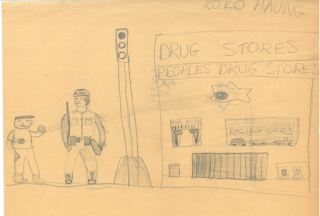
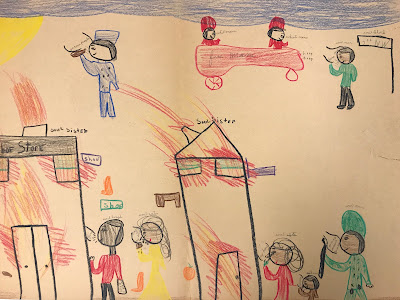
Drawn by a 4th-grader, this map scene, drawn in pencil and crayon, may have had its inspiration from newspaper maps published at the time of the 1968 riots showing areas most damaged by fire. “Those who cannot remember the past are condemned to repeat it” wrote Italian philosopher, poet, and essayist George Santayana (1863 - 1952). At Rauner Library, we often come across historical items and artifacts that speak to the reality behind Santayan’s words - demonstrating shocking parallels between current and historical events. This week, amid widespread protests, one such group of items captured our attention - John Matthew’s collection of political protest drawings and ephemera, which we previously highlighted on the Rauner blog back in 2015. Alongside political posters, student newspapers, flyers, banners, pamphlets and ephemera related to civil rights protests between 1968 and 1969, the collection also contains 23 original drawings depicting riots in Washington DC following Reverend Dr. Martin Luther King Jr.’s assassination in April of 1968. The drawings - created by Black school children ages 8 to 16 who lived in neighborhoods most affected by the protests - strike a particular cord given their similarity to recent events unfolding in Washington D.C. and cities across the U.S. like Minneapolis and Chicago, where protestors have mobilized following the death of George Floyd.

Norman W. Nickens, the assistant superintendent of D.C.’s Model School Division at the time of Martin Luther King Jr.’s death, was the impetus for creating this unique record of the Washington protests as recounted through the eyes of schoolchildren. As President Lyndon B. Johnson quelled demonstrations and looting using federal troops, Nickens instructed his teachers to have the students use a variety of creative forms to express their feelings about the turmoil they’d experienced, including in-class discussions, compositions and finally - drawings.

Many of the drawings depict burning buildings, ruined storefronts, and imposing crowds of helmeted federal troops amid figures with comic-strip balloons crying “help me!” or “stop!” Although some drawings focus solely on police and federal troops confronting Black protesters and others depict store looting, they all convey a sense of fear and a feeling that the world was spinning out of control. As the author of one of our drawings - a 5th grader - said at the time, “I thought the world was coming to an end… I felt like a man in a house fire.”

Pencil drawing by an junior high school student depicting a Black protester hurling a rock through the front window of a store in front of an armed military personel.During what has since been called the “Holy Week Uprising” of 1968, crowds of as many as 20,000 overwhelmed Washington’s 3,100-member police force, and President Lyndon B. Johnson dispatched some 13,600 federal troops, including 1,750 federalized D.C. National Guard troops to patrol D.C.’s streets. By the time the city was considered “pacified” on Sunday, April 8, some 1,200 buildings had been burned, including over 900 stores. Across the country, over 40 protesters died and over 2,500 were injured.

As some of the children’s drawings show, Black store owners across Washington D.C. wrote “soul brother” or “soul sister” across their storefronts so that looters would spare their stores. What did the phrase mean? To some of the interviewed children, being a soul brother or soul sister meant “being proud of being Black”, but to others - including a 7th-grader who drew one of the protest drawings - “A soul brother is a person who treats his neighbor as he would want his neighbor to treat him.” One group of Black second-graders wrote “Soul Sister” across their white English teacher’s blackboard the day after Dr. King was assassinated, even “advising her to go home early because the streets were unsafe” according to a New York Times article written by education reporter John Mathews, who had access to some of the material that had been created by the children. As the teacher recounted, her young pupils were “unusually affectionate and protective” amid the violence, having recognized her as what we would call an “ally” today- someone who stands up for others, even when they feel scared, and acknowledges and transfers the benefits of their privilege to those who lack it. These, along with many other stories of shared humanity and kindness - comprise the largely untold narrative behind an overwhelmingly violent collection of illustrations.

Colorful crayon drawing, authored by an elementary student, depicts Black community members mourning the loss of their stores and a police vehicle with occupants labelled as "white men". Notice the tops of the storefronts, which read "soul sister" and "soul brother."

Despite the fact that inscribing “Soul Brother” generally provided insurance against damage, the children’s drawings also show that not all destruction was strategically planned. For instance, some of the drawings depict stores owned by white community members, engulfed in flames, with Black families living above them trapped and burned out of their own homes. Such illustrations depict the disproportionate impacts of the Holy Week Uprising felt by predominantly Black communities following the protests, despite the initial strategy of targeting white businesses.

Three part crayon drawing by an elementary student depicting what the student's block looked like before, and after the riots broke out across Washington D.C., and what the students thought their neighborhood would look like in the future. In the future, the street looks largely the same, save for all the stores are brimming with goods.In addition to reflecting upon their past experiences during the four days of unrest, the  younger children were asked to draw pictures of their neighborhoods on Friday  - the day after MLK’s assassination; on Monday - after the largest riots had occurred - and visions of what they believed it could look like in the future. The Friday scenes usually show fires, looting, and skirmishes with police, whereas the post- riot illustrations show shells of smoldering buildings, shattered windows, and militarized occupation by federal troops. Although these pre and post-riot illustrations are interesting, it is perhaps the children’s’ depictions of the future that are most illuminating… Many of these drawings depict city blocks completely transformed into a pastoral suburbia of single-family homes, with beautiful trees, families walking together, and blooming flowers.

Other pictures show the same city block, but with all the stores opened and the shelves brimming with food and supplies. These images speak to the shared hopes each of these children held for the future even amid experiencing some of the worst civil unrest during the Civil Rights movement - the desire for safety - a loving family-like community, and plentiful food and shelter. Today, although protests have taken different forms, these same desires inspire activists. The same hopes and dreams that brought thousands to the streets in 1968 still pulse in the hearts and minds of protesters today.

To view these striking snapshots of history through the eyes of the children who were living it, I encourage all those who are interested to request “MS-1335” the next time you visit Rauner Library.

Friday, May 22, 2020

Not to Worry

Five-page letter from Maurer to his mother
In 1922, Viljahlmur Stefansson had the idea to send a small group of explorers to settle Wrangel Island. Wrangel was uninhabited, and strategically located to control an important swath of the Arctic Sea above the Bering Strait. Years earlier, the survivors of the Karluk stayed there awaiting rescue after the ship was crushed by ice. There was plenty of wildlife, so Stefansson thought it could be inhabited. It fit perfectly with his ideal of the "Friendly Arctic."

So he sent four young men and Ada Blackjack, an Inupiat seamstress from Nome, to claim Wrangel Island for Canada. A year later, only Ada remained alive. It is a horrible story of Anglo-American hubris being shattered by ice and the harsh reality of the Arctic climate.

Detail of letter text about "Vic" the cat
We have all of the correspondence related to planning the Wrangel Island Expedition. It is full of optimism so it is difficult reading when you know the end result. But the worst is a letter we found from Frederick Maurer to his mother written just days before he left Alaska for Wrangel. He tells of finding "Vic," the kitten they brought along, his recent hastily arranged marriage, and his hopes for the expedition ahead and the rewards to be reaped with its success. Like a good son, he first reassured his mother not to worry:
I could not be very comfortable feeling that you were at home worrying over my safety when it is so unnecessary. You know that we are well equipped and although we are going to Wrangel Island, we are going to be living in comfort compared to the last experience up here.
Then he prophetically ties his success to Stefansson's reputation:
My going North is not for adventurous reasons as it was before, instead we are planning on commercializing the resources of the island along with exploration. It is possible that its developments may prove well worth while and as far as my investment is concerned it is as safe as Stefansson's reputation.

Fredrick Maurer on Wrangel Island
The resulting catastrophe took Maurer's life and seriously damaged Stefansson's reputation. His mother had every reason to worry.

To see the letter, ask for Stef MS-98, box 9, folder 7.

Friday, May 15, 2020

Cromwell's Bible

There is nothing better for social distancing then a really good book. If you are like a lot of us, you are knee deep in Hilary Mantel's final installment of the Wolf Hall series, The Mirror & the Light. It lives up to the previous two novels in the series following Thomas Cromwell's rise and fall in the court of Henry VIII.

Throughout the third novel, Cromwell is overseeing the production of what came to be know as The Great Bible--a full English translation fit for the evolving Church of England. The book was being printed in Paris because they wanted the best quality work Europe had to offer, but political difficulties kept rearing up (a Protestant bible in France... not cool with the Inquisition). When it was nearly finished, Cromwell had all of the type and printed sheets brought to England to complete the printing.

Our copy is particularly nice because when it was bound someone put "Lord Crumwel" on the spine--you get the feeling, based on the various pronunciations of Cromwell's name in Wolf Hall, that it was a native French speaker--though I doubt it was a member of the Boleyn family!

The title page, probably designed by Hans Holbein, is amazing. The word comes from God, but Henry doles it out to the people--on his right to the head of the church to distribute to the clergy, and on this left, to Cromwell to send out to the laity.

Cromwell didn't last much longer after the publication was finished, but the book is alive and well in our collections. To see it, ask for Rare BS155 1539.

Friday, May 8, 2020

He Walked the Walk

Photograph of Dean Warner Traynham
"In each of the spring and fall terms of 1975, a letter appeared in the editorial pages of the D from a gay person, asking for understanding. There were no responses… It was like watching a pebble fall into a pond and produce no ripples. To mix metaphors, the silence screamed." – Dean Warner Traynham, 1978

Starting a conversation about a topic that was once taboo often requires a few brave voices to break the silence before the more hesitant ones join in. I was surprised to find that in the 1970s and 80s, gay Dartmouth students had a prominent voice on their side: Dean of the Tucker Foundation, Warner Traynham.

Throughout 1978 and 1979, Dean Traynham published several broadsides about issues that were
"Sexuality and Homosexuality" broadsiderelevant at the time. One, entitled "Sexuality and Homosexuality: Some Thoughts," makes a thorough, four-page case that gay people should not be condemned on a religious, legal, or scientific basis. Traynham points out that "condemnation of male homosexuality and the subordination of women go hand in hand in patriarchal societies," and that "[t]here is no clear evidence that there is anything about a sexual orientation toward a person of the same gender that impedes the healthy development of an individual or endangers society." He concludes that "for those who know they are gay and accept it, no apologies are necessary." This sentiment was an incredible display of support for the time, and even more meaningful coming from a religious leader.

Letter from Dean Traynham to Wayne April discussing the lack of a gay group on Dartmouth campus
However, Dean Traynham did not limit this public support to writing his own views on gay rights. The Tucker Foundation hosted several open conversations about gay issues while they were still largely controversial. In the summer of 1976, the Tucker Foundation held a panel on "sexual values on college campuses." Traynham intentionally included a gay speaker on the three-person panel, noting that while the others would be professional ethicists, "there are relatively few professional ethicists to represent the perspective of gay people." He also notes that at the time, Dartmouth was the only Ivy League college that had not yet formed a gay student group, and that he hoped the panel would "provide a context for addressing it."

It was not long before Dartmouth did have its own Gay Student Support Group (GSSG), but it is unclear how much Dean Traynham and the Tucker Foundation directly supported the GSSG. The first time the organization is listed in a Council on Student Organizations (COSO) report is for the 1978-79 academic year (after it had already changed its name to the Gay Students Association), and it may have received funding from the Tucker Foundation in the meantime; an article in The Dartmouth about the group’s beginnings names the Tucker Foundation as the only alternative to COSO for funding. In any case, Stuart Lewan, who organized the GSSG, called the Tucker Foundation the group’s "administrative home." Clearly, the Tucker Foundation was a place where gay students felt comfortable.

I have personal experience advocating for the trans community at present-day Dartmouth, and trans students are usually alone in raising issues that affect us. Because we’re such a small population and so few of us are able and willing to speak out, it is hard to be heard in a campus culture that, for the most part, is ignorant of trans people’s needs. I took an interest in Dean Traynham and the Tucker Foundation’s support for gay rights not only because they supported gay rights, but because the way Traynham showed that support was remarkable. He not only publicly expressed his views, but intentionally created spaces where gay people could speak for themselves. In the words of Lewan, "he walked the walk," and his efforts succeeded in amplifying the conversations about gay issues beginning at Dartmouth.

To read "Sexuality and Homosexuality: Some Thoughts," ask for D.C. History HN51.D37. For access to Dean Traynham’s chronological correspondence, request DA-114, Box 3703.

Posted for Valen Werner ’20, recipient of a Historical Accountability Student Research Fellowship for the 2020 Spring term. The Historical Accountability Student Research Fellowships provide full funding for a current Dartmouth student to conduct research with primary sources during an off-term on a topic related to issues of inclusivity and diversity in the college’s past. For more information, visit the fellowship’s website.

***

All References:
•  Broadsides: DC Hist HN51.D37
•  Panel: DA-114 Box 3703, Chronological files 1976
•  Stuart Lewan’s SpeakOut interview
•  DA-8 Box 2626, COSO 1979-80
•  The Dartmouth January 31, 1978; page 7

Thursday, April 23, 2020

Earth Day 2020: Reflections from Special Collections

Photo of the cover of Rauner Library's first edition of Silent Spring.
Cover of the first edition of Silent Spring
On April 22nd, we celebrated the 50th anniversary of Earth Day. Since 1970, Earth Day has increased awareness of the incredible planet we live on and encouraged people to learn more about pollution, habitat destruction, the plight of endangered species, and many other environmental issues. What began as a demonstration spearheaded primarily by college-aged anti-war protesters amid the Vietnam War, has since grown into the largest secular observance in the world, marked by more than a billion participants every year as a day of action to change human behavior and provoke policy changes for the collective good of our planet. Since its inception in 1970, Earth Day has given a voice to an emerging public consciousness about the state of the natural world, epitomized today in a new generation of environmental leaders, such as global climate activist Greta Thunberg or Jasilyn Charger of the Cheyenne River Sioux Tribe, whose One Mind Youth Movement sparked national protests against the Dakota Access Oil Pipeline. In honor of this milestone, and in anticipation of an upcoming digital exhibit supported by Dartmouth’s Rauner Special Collections Library titled Vanishing: Making of an Extinction Crisis, today we are highlighting an unassuming, but incredibly important book that not only helped ignite the modern Environmental Movement, but holds timely lessons for how we should interact with the environment today.

The book in question - the first edition of Rachel Carson’s Silent Spring, published in 1962, was revolutionary in how it translated complex chemical and ecological relationships into easily comprehensible arguments, its popularity, and its appeal to the general public. Due to a combination of these factors, Carson’s investigation of the potentially adverse impacts of widespread synthetic pesticide use - in agriculture and by the U.S. government in pest eradication programs - led to widespread concern about environmental and human health impacts, environmental policy change, and the emergence of the modern Environmental Movement. Today, Silent Spring continues to provide a valuable lesson about how we should interact with our fragile planet: proceed cautiously and think long-term

Prior to the publication of Silent Spring in late 1957, Rachel Carson was a distinguished marine biologist, author of the widely acclaimed novel The Sea Around Us, and the second woman hired by the U.S. Bureau of Fisheries (later the U.S. Fish & Wildlife Service). Through her friendships with fellow biologists, Carson closely followed a rising number of federal proposals for widespread pesticide spraying; including the United States Department of Agriculture's (USDA) plans to eradicate fire ants, gypsy moths, and other insects using chlorinated hydrocarbons and organophosphates. After nearly ten years of investigation and research, Carson published Silent Spring to raise environmental consciousness among the American public about what she saw as potentially dangerous synthetic pesticides, including the notorious substance known as DDT (Dichloro Diphenyl Trichloroethane). In the course of 250 pages, Carson translated ten years of ecological and chemical research into a narrative detailing how America’s addiction to pesticides would severely harm human health, the environment, and future generations’ ability to control increasingly resistant insect pests.

Amid the turmoil of the 1960s, USDA officials, farmers, and chemical-producing companies applauded the efficacy and safety of synthetic pesticides at killing insect pests. At a time when air, water, and soil pollution were mere afterthoughts in the minds of many industry leaders, Carson’s Silent Spring made two bold assertions; first, that synthetic pesticides like DDT could be carcinogenic and thus harmful to humans, and second, that chemicals like DDT can have huge negative environmental impacts, accumulating in the food chain until they interfere with biological processes and ecosystem functioning. In chapter 3 - famously titled “Elixirs of Death” - Carson presented considerable evidence for the toxicity of a wide array of synthetic pesticides, noting that “for the first time in the history of the world, every human being is now subjected to contact with dangerous chemicals... they occur virtually everywhere.” Although the chapter reads more like a gripping detective crime novel, Carson based her findings on research completed by National Cancer Institute researcher and environmental cancer section founding director Wilhelm Hueper, who had begun to classify many pesticides as carcinogenic - or cancer causing - for both animals and humans. With the help of her research assistant Jeanee David and NIH librarian Dorothy Algire, Carson found evidence to support the pesticide-cancer connection, much to the chagrin of chemical companies and many peers from the scientific community who reviewed Silent Spring. This finding was in sharp contrast to the general perception of chemicals like DDT at the time, which was sprayed readily across parks, beaches, and lawns to control mosquitoes, oftentimes while people were present. Later, in chapters titled “And No Birds Sing” and “Needless Havoc,” Carson reported that many synthetic pesticides readily accumulated in the environment, exponentially increasing in potency as animals lower in the food chain (i.e. fish) were consumed by animals higher in the food chain (i.e. eagles). Carson reported that this process - known as bioaccumulation - had significant negative impacts on many animals, most famously on birds. Carson discovered that birds ingesting DDT tended to lay thin-shelled eggs that would break prematurely, resulting in population declines of more than 80 percent. With continued use of synthetic pesticides like DDT, Carson predicted a grim future where birdsong would be largely absent - hence the title of her book.
Photograph of the opening chapter page from chapter seven titled "Needless Havoc". The illustration depicts a group of woodland animals to emphasize the chapter's focus on chemical accumulation in natural food webs.
Illustration from the opening page of chapter seven, highlighting the harmful impacts of chemical accumulation in food webs.
Given Silent Spring’s radical claims, the book caught the eye of agrochemical companies, industry leaders, and government officials; many of whom stood in favor of liberal synthetic pesticide use either due to their effectiveness at destroying insect pests or because they hoped to safeguard their own economic interests. As with most revolutionaries who have prompted society to question established institutions, industries, or ways of thinking, Carson received considerable criticism from the aforementioned groups following the release of her book. American biochemist Robert White-Stevens and former chemist Thomas Jukes were among Silent Spring’s most aggressive critics, especially of Carson's analysis of DDT. According to White-Stevens, "If man were to follow the teachings of Miss Carson, we would return to the Dark Ages, and the insects and diseases and vermin would once again inherit the earth." Others went further, even attacking Carson's scientific credentials, arguing that her training in marine biology rather than biochemistry left her inept to discuss synthetic pesticides. White-Stevens labeled her "a fanatic defender of the cult of the balance of nature,” while former U.S. Secretary of Agriculture Ezra Taft Benson, in a letter to former President Eisenhower, reportedly concluded that because she was unmarried despite being physically attractive, she was "probably a Communist.” Soon, even large agricultural and chemical companies joined in protest, trying to discredit the validity of Carson’s science while warning the public about the dangers of “questioning pesticides.” For example, agro-chemical giant Monsanto published 5,000 copies of a Silent Spring parody called "The Desolate Year" (1962) which projected a world of famine and disease caused by banning pesticides. Although critics repeatedly asserted that Carson was calling for the elimination of all pesticides, Silent Spring does not call for a complete ban of pesticides, but rather a cautious and careful approach to pest management and agricultural production; an approach considering all the environmental and human-health impacts of man’s actions prior to pursuing a “one size fits all” strategy. As evidenced by the slew of protests, Silent Spring was revolutionary in its critical examination of America’s love of pesticides.

Despite all the criticism, a growing body of scientific evidence has since supported Carson’s assertions. For example, in 2015, the International Agency for Research on Cancer classified DDT as a “probable carcinogen to humans”, with exposure leading to higher rates of both pancreatic and skin cancer. In addition, according to the EPA, “a relationship between DDT exposure and reproductive effects in humans is suspected.” Meanwhile, the detrimental impact of DDT on wildlife has also become evident through rebounding populations of previously endangered aquatic and avian species that Carson believed were negatively impacted by DDT. According to recent estimates, a ban on DDT and other pesticide reductions have allowed for the comeback of the bald eagle, peregrine falcon, brown pelican, and many other species once facing extinction in the contiguous United States. As a New York Times science article published on March 11th, 1982, described:
Since the ban (on DDT), the brown pelican, one of the most threatened species, has increased to an estimated 5,000 pairs along the Atlantic Coast, up from a low of about 1,100 to 1,200 breeding pairs in the 1960's. Ospreys, or fish hawks, had fallen to about 100 breeding pairs from 1,000 on the coastline between New York and Boston. Biologists are now hopeful the species will return to higher levels by the end of the century.
As a growing body of evidence has since proven Carson’s premonitions, her call to proceed with caution in environmental matters, echoed throughout Silent Spring, becomes increasingly poignant. Carson encouraged Americans to question the logic of broadcasting potentially dangerous chemicals into the environment with little prior investigation of their environmental and health effects - but her powerful message, to question the indirect consequences of our actions on other organisms and future generations, extends well beyond pesticides. Were Carson alive today, she’d likely encourage us to approach practices in our everyday lives that we’ve accepted as “normal” - from industrial-scale cattle farming to ordering copious amounts of Amazon products - with a similar dose of caution and criticism. Silent Spring reminds us that only by proceeding cautiously and thinking about future generations, can we enact positive environmental change.
Opening illustration to Chapter 10 of Rachel Carson's Silent Spring, depicting an airplane spraying DDT over a suburb.
Opening illustration to Chapter 10 of Silent Spring.
Despite its “radical-ness” as one reviewer called it, the first edition of Rachel Carson’s Silent Spring is a rather unassuming book. Beautiful pencil illustrations resembling playful images in children’s books about woodland animals or planes accompany the opening to each chapter, whereas Carson’s prose reads more like a poetic nonfiction crime novel than a scientific call-to-action. Looking at these features, it’s hard to believe that Silent Spring lit the match that ignited that fire that helped fuel the modern Environmental Movement. Yet these features help explain why Silent Spring appealed to such a broad audience, and therefore elucidate how it left such an enormous impact on public opinion. Thanks to Carson’s blend of carefully crafted data and moral-based arguments, in addition to her approachable writing style, the book became an enormous success. Silent Spring was named America’s “Book of the Month” following its release, landed a spot on the New York Times bestseller list (not an easy feat for a scientific work authored by a woman to achieve at the time), and sold more than 520,000 copies in 24 countries.

In addition to Carson’s engaging and approachable writing style and the sheer number of copies sold, Silent Spring was especially impactful due to the composition of the audience it reached. Silent Spring was particularly well-received by middle-class readers in addition to scientists and political elites, many of whom weren’t from traditional scientific backgrounds. As Carson said following the nomination of her work as the book-of-the-month, she hoped to "carry (Silent Spring) to farms and hamlets all over that country that don't know what a bookstore looks like—much less The New Yorker." Indeed, the book achieved something rare at the time; for a narrative based on ecological, chemical, and oncological research, it was read ravenously by farmers, small business owners, and Americans from various educational backgrounds across the U.S.

By prompting readers to confront their reliance on chemicals and by presenting them with the reality that their everyday habits might have unexpected consequences for future generations, organisms aside from pests, and their own health, Carson in turn provided a launchpad for Americans to be more critical of how they interacted with the environment on a daily basis. Silent Spring bolstered growing frustrations that young Americans felt toward governments and industries amid the Civil Rights Movement, the Vietnam War, and environmental catastrophes such as the massive 1969 oil spill in Santa Barbara, California, and channeled those feelings toward a mechanism for change (i.e. environmental policy). In doing so, Carson inadvertently fanned the flames for environmental action to spread like wildfire in areas beyond synthetic pesticides. Today, the founders of Earth Day recognize the large role that Silent Spring played in the establishment of their own environmental movement. As EarthDay.org notes, “the stage was set for change with the publication of Rachel Carson’s New York Times bestseller Silent Spring in 1962. The book represented a watershed moment as it raised public awareness and concern for living organisms, the environment and the inextricable links between pollution and public health.”

Chapter 3 "Elixirs of Death" opening page, with an illustration of a cluster of chemical bonds.
The paradigm shift in environmental thought started by the publication of Silent Spring had an enormous and measurable impact upon the environment and human health beginning in the 1960s. As readers began to concern themselves with the accumulation of potentially hazardous chemicals in the environment and in turn their own bodies, increasing pressure was placed on legislators, agrochemical companies, and landowners to enact change. The positive impacts of Silent Spring are perhaps best observed in the significant decline in the use of DDT-based pesticides in the United States following the book’s publication. As the U.S. Environmental Protection Agency (EPA) describes in their Brief History and Status of DTT publication:
The U.S. Department of Agriculture, the federal agency with responsibility for regulating pesticides before the formation of the U.S. Environmental Protection Agency in 1970, began regulatory actions in the 1960s to prohibit many of DDT's uses because of mounting evidence of the pesticide's declining benefits and environmental and toxicological effects. The publication in 1962 of Rachel Carson's Silent Spring stimulated widespread public concern over the dangers of improper pesticide use and the need for better pesticide controls.
Indeed, Carson’s challenge - to not only consider the efficacy of pesticides in ridding of pests, but to critically examine the long-term and indirect impacts of chemicals before building agricultural systems reliant upon these substances -  led to the establishment of the EPA and a subsequent ban on DDT’s agricultural use across the United States in 1972. After President John F. Kennedy read her book, Carson was called to testify before his Science Advisory Committee, which was in turn summoned to critically investigate DDT and other synthetic pesticides’ potential negative impacts.
Rachel Carson testifying before the Senate Government Operations subcommittee studying pesticide spraying on June  4th, 1963.
Carson testifying before the Senate subcommittee.
The committee issued its final report largely backing Carson's scientific claims on May 15, 1963, leading to a landslide of pro-environmental legislation echoing Carson’s call for caution in matters of the environment. In the 30 years prior to being banned in 1972, a total of 1,350,000,000 pounds of DDT had been sprayed across agricultural lands in the United States. In the 30 years since 1972, this number was cut to essentially zero. And the most amazing part? Agricultural production did not collapse with stricter regulation of synthetic pesticides as companies that had heavily opposed Silent Spring’s publication originally predicted.

In conclusion, despite fierce opposition from chemical companies, Silent Spring inspired a generation to stand up for the health of the environment and helped ignite the modern Environmental Movement which continues today in the process. Following Silent Spring, those inspired by the text reversed federal pesticide policy, enacted a nationwide ban on DDT in agriculture, established the Environmental Protection Agency, and founded Earth Day. Silent Spring was revolutionary for condeming short-sighted tampering with the environment that was pervasive during the Cold War, challenging farmers, companies, consumers, and the U.S. government to consider the long-term side effects of their actions. Aside from Carson’s radical message, Silent Spring is a remarkable testament to the power of translating science in an engaging manner to diverse audiences, particularly those from non-scientific backgrounds. Without Silent Spring, and hence the ban on DDT and ensuing protections on many species, bald eagles and dozens of other bird species would have likely disappeared from the continental U.S., and humans would be facing higher rates of cancer and other adverse health effects.

Were Carson alive today (she passed in 1964), she’d be happy to learn about efforts that have been made to safeguard our waterways and species diversity, but she would also challenge us to go further. Today, Carson would reiterate Silent Spring’s timely lesson about how humans should interact with our fragile planet: we must proceed cautiously and think about long-term resilience. In an age where we’ve become increasingly aware of the myriad of ways in which chemical, biological, and sociocultural systems are interconnected, we must devote an adequate amount of time to science before committing ourselves to a single course of action, in order to understand the ramifications before it’s too late. In addition to proceeding with caution, we must be continually critical of established practices, in order to identify unintended consequences whose impacts couldn’t previously be measured. Just as Carson used animal trials and long-term observation to examine the true cost of our insatiable appetite for pesticides, we need to think of potential indirect effects and future impacts before committing ourselves to a singular course.

To read the first edition of Silent Spring for yourself, request "Depository SB959 .C3" the next time we're open!

Wednesday, April 8, 2020

A Haggadah for Seder

A woodcut illustration of a group traveling on foot, surrounded by printed Hebrew text.We recently purchased a rather extraordinary Haggadah printed in Pisa in 1806. It is interesting to think of the original audience for this particular book: a group of Tuscan diaspora Jews in the early 19th century. What was the Seder like where this Haggadah was first present?

What makes this edition so exciting are the eighty woodcut illustrations that take the reader through all phases of Passover. 

A set of four woodcut illustration accompanied by Hebrew text. They show a woman engaged in various domestic tasks including cooking and building up a fire.
It starts with the preparation of the household with woodcuts showing a woman readying her home for Passover followed by the Seder itself.

A series of twelve woodcuts accompanied by Hebrew text, showing the progression of a Seder.

Then, the Haggadah presents the annual retelling of the liberation of the Jews from Egypt. It is a beautifully illustrated epic.
A woodcut showing a series of devil-like figures releasing plagues.

A woodcut showing two figures in bed inside their home, while outside three figures seem to lament over babies in a river.
To see the book, ask for Rare BM675.P4A3 1806.