One of the great joys of working in special collections is the serendipitous discovery of some small detail that further expands our knowledge about a subject or aspect of Dartmouth's history. We've blogged before about how Rauner Library was part of the Shared Academic Experience as part of New Student Orientation back in September of 2018. Incoming freshmen visited the Orozco murals in the basement of Baker Library with Professor Mary Coffey and then came over to Rauner Library to see archival films, Orozco's original sketches from the Hood Museum, and examples of how the murals were received by Dartmouth students and alumni. For the same event, we happened upon a letter written by President Ernest Hopkins to Dartmouth's Treasurer, Halsey Edgerton. In the memo, Hopkins provides a hint of some interesting and somewhat humorous details related to the Mexican muralist who had been commissioned to paint the frescoes at Dartmouth amid a fair bit of controversy.
The first item of interest is that Orozco was one of two "sensations in mural painters" that were in the zeitgeist; the other painter that Hopkins alludes to is Diego Rivera. The college, with the encouragement of the Chair of the Art Department, Artemus Packard, had originally considered bringing both artists to campus, but the funding didn't pan out. Instead, Packard chose Orozco because his work was more in the traditional style than Rivera's. It's also interesting to note that money from the Rockefeller (yes, those Rockefellers) tutorial fund was used to pay Orozco because he was brought to campus as an instructor and not merely a muralist. One might catch a whiff of hypocrisy in Orozco's willingness to receive Standard Oil money in exchange for his services, given that Hopkins describes him as a "flaming red communist." However, even if Orozco was aware of where the money was coming from, he clearly didn't have a problem with vocally rejecting exploitative capitalism even as he benefited from him. As Hopkins notes, Orozco once told a wealthy patroness that he hoped she would be assassinated, even while he was in the midst of painting a fresco for her in her own home.
The institution of Dartmouth College, thankfully, was exempt from Orozco's fury because he considered it to be "eleemosynary," or a site of charitable giving. However, he still felt (at least according to Hopkins) that the faculty should be "annihilated." With that in mind, Hopkins closes the letter by warning Treasurer Edgerton not to oppose Orozco at any point. He playfully says that he'd "hate to lose a good treasurer" and that Edgerton represents "all that he [Orozco] abhors."
To take a look at the correspondence related to the painting of the Orozco murals, come to Rauner and ask for the Collection relating to the work of Jose Clemente Orozco (DL-34, Box 6122, Folder 23).
Tuesday, January 29, 2019
Friday, January 25, 2019
The Impression of a Birthday
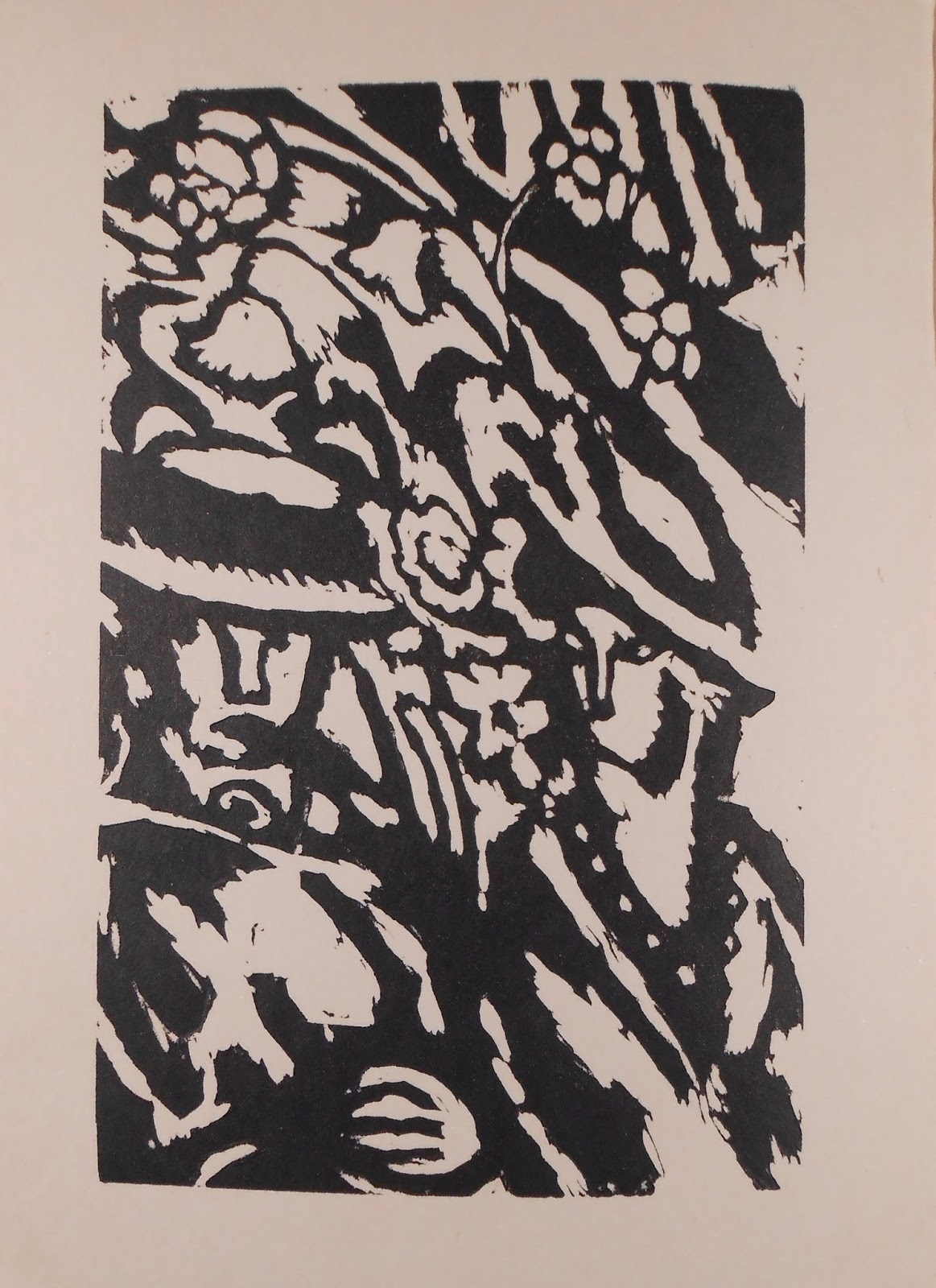
"From the oval shaped flower-bed there rose perhaps a hundred stalks spreading into heart shaped or tongue shaped leaves half way up and unfurling at the tip red or blue or yellow petals marked with spots of colour raised upon the surface; and from the red blue or yellow gloom of the throat emerged a straight bar, rough with gold dust and slightly clubbed at the end."We offer you these flowers as described and hand set in type one hundred years ago by Virginia Woolf, today, on her birthday.
Want more? Ask for Kew Gardens, printed by Virginia and Leonard Woolf in 1919, Val 827W884 S5.
Tuesday, January 22, 2019
Visions of War
This week, a Dartmouth Art History class, "The Photographic Medium," is visiting us to look at a variety of ways in which photographic images and technologies have evolved over the last 170 years. The class promises to be an exciting one, with examples of stereoscopic cards, alumni photo albums from World War I, and Gardner's Sketchbook of the Civil War, among others, available in the room for the students to explore. One of the important themes that we will be touching upon is how photography becomes a powerful tool for wartime propaganda. Along with a pictorial of the Polish military on the eve of World War II, we also have nearly a full run of Visions de Guerra i de Reraguarda, a publication that was issued by the Catalonian minister of propaganda from 1937 to 1938 during the Spanish Civil War. These texts were meant to increase global support for the anti-fascist movement in Spain as well as raise morale for the Republican fighters who were beginning to flag after more than a year of bloodshed.
In a clear statement of regional and cultural independence, the photographic captions in each volume are printed in both Spanish and Catalan. The publication was issued biweekly in two series, A and B.
Series A is committed to showing scenes from the initial military coup in Barcelona and Madrid in July 1936 and its immediate aftermath, while Series B is focused on current events of the war. Here at Rauner, we are fortunate to have a complete run of Series A and 1-17 of the 20-volume Series B. The scenes of common citizens, dressed in everyday clothes but wearing helmets and holding rifles and fighting for democracy against a fascist regime that ultimately would defeat them in 1939, are disconcerting and yet strangely inspiring.
To see the A Series of Visions de Guerra i de Reraguarda, come to Rauner and ask for Rare DP269.15 .V57. To see the B Series, DP269.15 .V572.
In a clear statement of regional and cultural independence, the photographic captions in each volume are printed in both Spanish and Catalan. The publication was issued biweekly in two series, A and B.
Series A is committed to showing scenes from the initial military coup in Barcelona and Madrid in July 1936 and its immediate aftermath, while Series B is focused on current events of the war. Here at Rauner, we are fortunate to have a complete run of Series A and 1-17 of the 20-volume Series B. The scenes of common citizens, dressed in everyday clothes but wearing helmets and holding rifles and fighting for democracy against a fascist regime that ultimately would defeat them in 1939, are disconcerting and yet strangely inspiring.To see the A Series of Visions de Guerra i de Reraguarda, come to Rauner and ask for Rare DP269.15 .V57. To see the B Series, DP269.15 .V572.
Friday, January 18, 2019
Dubious Drugs
We know we've posted before about 19th-century drug advertisements, but this week we had some visitors come in to look at our various pharmaceutical-related materials and couldn't help ourselves. Two broadsides, in particular, tickled our fancy. Perhaps some of the draw for these particular items is that they are both from close to home. One proprietor hails from Haverhill, New Hampshire, while the other is based out of Cornish Flat, New Hampshire. In the Haverhill broadside, which seems to extol the healing properties of northern New Hampshire flora, the author goes so far as to try his hand at a bit of poetry. He personifies tuberculosis as "Consumption, gaunt and ghastly," and claims that the disease will "soon will make his dread appearance, / And will seize his hapless victims." The only solution, predictably, is to:
Go and buy some DOWNS' ELIXIR
Some real N. H. Downs' Elixir;
Made of all most healing Balsams
Found in all the Northern forests, --
Balsams of the Pine and Fir tree:
Made in Burlington -- a City
Standing near the Champlain waters...
Go and buy it, and be happy.
Although this broadside ends on a dubiously happy note, the Cornish Flat broadside begins on a
decidedly grumpy note, judging from the portrait engraving of who we assume is the creator and purveyor of this particular medicine. Ironically, the dour-looking man in the engraving is most likely meant to be smiling, and his drug is described as "the Woman's Friend." While the Haverhill ad relies upon a touch of the humanities to move product, the description of the Cornish elixir insists that science is on its side and appeals to universal laws of biologic function. According to the good doctor, after a few weeks of taking his medicine, "Nature assumes her legitimate office, and at once the delicate girl is enabled to commence aright in a course indispensable to female health and happiness."
To see how chemically-induced happiness was peddled over a hundred years ago, come to Special Collections and ask for either or both of these broadsides. The Haverhill ad's call number is Broadside 000288, and the Cornish Flat ad is Broadside 000101.
Tuesday, January 15, 2019
Pigskin Panorama!
There are three things about this "Pigskin Panorama" that should give you pause. It is from 1939, and it maps all of the college football teams in America. Look at it for a minute--then read about the oddities below.The first two are contextual. Dartmouth has a good football team now--that last few years we have been competitive in the Ivy League, but things were different in the 1938 season. In that era, Dartmouth was a national powerhouse. On the back of the map there is one Dartmouth player listed as first-team All-American, and another listed as second team All-American. All-Americans!
That's one thing. The next one is just how big the Dartmouth player is that is representing team--look around the map, those big players are for the really big teams!
Then the third thing--and this is the most interesting. Eight teams are designated as members of the "Ivy League," and Cornell is listed as the Ivy League champion. "But wait," you history buffs cry out, "the Ivy League wasn't formed until the 1950s! How can this be?" You are right, the league didn't come into being until 1954, but the name had been bandied about by sports writers since the 1920s, and this map is for fans, so there you go, the Ivy League in 1939.
To see it, ask for Iconography 1737.
Friday, January 11, 2019
Rauner Exhibit: "Limits to Power: Daniel Webster and the Dartmouth College Case"
This year marks the 250th anniversary of the founding of Dartmouth College. In addition to our podcast, "Hindsight is 20/19", Special Collections is starting the year-long celebration with an exhibit titled "Limits to Power: Daniel Webster and the Dartmouth College Case." The Trustees of Dartmouth College v. Woodward, better known as the Dartmouth College Case, is a critical turning point in Dartmouth's history. Had this case been settled in favor of Woodward, and by extension, the State of New Hampshire, Dartmouth as we know it would not exist today.
The case was also a turning point for our country. The outcome of the Dartmouth College Case cemented the concept into United States Constitutional law, already present in English common law, that private charitable organizations serve the public good.
In addition, the case is one of several that is still cited today as the basis for the protection of corporate persons under the Constitution. Justice John Marshall’s opinion in this case has been cited in recent Supreme Court cases such as Burwell v. Hobby Lobby and Citizens United v. FEC.
This case also solidified Daniel Webster's, Class of 1801, already significant reputation as a constitutional lawyer. Webster was only 37 years old at the time, and his oratorical style, persuasive argument, and keen sense of strategy vaulted him to fame. Webster would go on to argue some 170 cases before the Supreme Court during his lifetime, but none are as well-known as this one.
While the emotional pull of his peroration, and the often-quoted line from it "It is, Sir, as I have said, a small college. And yet there are those who love it!" is the focus within the College community, it was his strategic decision to argue the case of corporate personhood based on English common law that won the day. Chief Justice Marshall had used this argument himself several times, both as a lawyer and in judicial opinions. It is likely that Webster was aware of this and made a conscious decision to cast his argument in a light that would appeal to the justices and to Marshall in particular.*
We invite you to enjoy this exhibit which lays out the narrative of the Dartmouth College Case. It was curated by Peter Carini, the College Archivist, and will be on display in the Class of 1965 Galleries in Webster Hall from January 2nd through March 27th, 2019. If you can't make it to Special Collections in person, you can read the exhibit text online here.
Tuesday, January 8, 2019
Hindsight is 20/19
This week kicks off Dartmouth's celebration of our 250th anniversary. There is going to be a lot going on in 2019 and we are joining in the fun with a podcast series to tell some of Dartmouth's most important stories through 25 objects from the collections--one item per decade.
We are pretty happy with how it is coming together. We will be exploring key moments in Dartmouth's history and spinning them out to talk about larger cultural issues. We are unsparing in our look at Dartmouth's past. We applaud Dartmouth's moments of forward thinking and the times when students took the lead in creating progress on campus, but we also look at Dartmouth's complex relationship with slavery, race, and gender, and point out the times we failed as an institution. We have a sense of humor about the past as well. A lot of weird things have happened, and we love talking about them.
The first episode is out and more will follow soon. Take a listen at Hindsight is 20/19.
We are pretty happy with how it is coming together. We will be exploring key moments in Dartmouth's history and spinning them out to talk about larger cultural issues. We are unsparing in our look at Dartmouth's past. We applaud Dartmouth's moments of forward thinking and the times when students took the lead in creating progress on campus, but we also look at Dartmouth's complex relationship with slavery, race, and gender, and point out the times we failed as an institution. We have a sense of humor about the past as well. A lot of weird things have happened, and we love talking about them.
The first episode is out and more will follow soon. Take a listen at Hindsight is 20/19.
Subscribe to:
Posts
(
Atom
)