Showing posts with label Cookery. Show all posts

Wednesday, November 27, 2024

Camp Cookery

The cover for the book "Camp Cookery," with an illustration of a campfire and fishing pole."The first thing to parties bent on roughing it is the selection of a tent." Maria Parloa's 1878 book Camp Cookery: How to Live in Camp begins with some general guidelines and "hints for comfort" when supplying a camping trip. She walks the reader through how big one's tent should be, how to set it up, how to select a camp stove, what to wear -- "both ladies and gentlemen should dress in flannel throughout" -- provisions to bring, and how to observe perfect cleanliness. This is all prelude to her main objective: how to cook.

Parloa's handbook makes it clear that being in the great outdoors should not come at the sacrifice of eating well. Her instructions include ambitious projects like a clam bake for "ten to twenty persons," as well as practical instructions for the less accomplished cook, ensuring that her readers know how to prepare basics like coffee and scrambled eggs. Of particular note is the large selection of puddings and baked goods, as well as various gruels for those who find themselves ill while roughing it.

After finding success with her first cookbook in 1872, Maria Parloa (1843-1909) shifted from working as a cook to a long career of teaching others. After the publication of Camp Cookery, she traveled to Europe to study additional cuisines and their accompanying pedagogies. Back home, she led classes, gave popular lectures, and published additional books. She founded her own cooking school and became a sought-after guest at other institutions. She expanded her expertise in other areas of household management and established herself as a trusted authority in the developing field of home economics. Highly successful if no longer well-known, we thought a look at her life and work would be a good way to christen the holiday week.

To look at Camp Cookery, ask for Rare Book TX823 .P25 1878.

Friday, March 8, 2024

Jamaican Pepper and Turkish Figs

Front page of the 1726-27 grocer's invoiceWe recently acquired two humble yet fascinating little manuscripts that shed an impressive amount of light on the capitalistic and exploitative foundations of British colonialism: early 18th-century London grocery bills. Both of these folio pages supply a wealth of information about what England was bringing home from its colonies abroad for Great Britain's upper class. At the top of both invoices, grocer John Cosins boasts that he "sells the best coffee, tea, chocolate, [with] all sorts of Grocery at reasonable rates."

In this circumstance, these superior groceries had been sold to Sir Thomas Sebright, 4th Baronet of Beechwood Park, in the late 1720s. Sebright was an English politician and landowner whose father-in-law was the Lord Mayor of London. Sebright was also implicated in the notorious "South Sea Bubble" stock market crash; he and other politicians had received gifts of stock in the South Sea Company, which had artificially inflated its value through similar schemes.

Despite his questionable ethics, Sebright seems to be doing quite well for himself years later as he enjoys the fruits of other's labor: pepper from Jamaica, figs from Turkey, and Asian spices like cloves and nutmeg. To have a look at a colonizer's shopping list, inquire at Rauner's reference desk. These items haven't been catalogued yet but soon will be.

Friday, November 10, 2023

The First Bartender's Guide

How to Mix Drinks Preface image of man holding a drink as a muse emerges from a bottle
Drinking has been around pretty much forever, but it took some time before anyone got around to creating a guide for the budding mixologist. In 1862, the publisher Dick & Fitzgerald stepped in to fill the void with How to Mix Drinks, or, The Bon-Vivant's Companion. It has one of those title pages that tells you everything--practically a table of contents. There is an introduction that carefully distances the author, Jerry Thomas, from advocating for the consumption of ardent spirits, but the details inside, as well as the illustration of the sot with a muse emerging from a bottle tell us otherwise.

Title page of How to Mix Drinks
There are lots of great recipes, but we were taken by the list of other publications of the firm with titles like: Hard Words Made Easy; The Mother's Medical Advice; The Art of Conversation; The Ladies' Guide to Beauty; and Every Woman her own Lawyer. Dick & Fitzgerald created a self-help wonderland for the young and naive seeking to make their way in the world. But perhaps the most fitting companion volume to How to Mix Drinks is the must-read Blunders in Behavior Corrected, because, you know after you've been drinking, you might need to correct the blunders in your behavior.

Cover of How to Mix Drinks showing a well-dressed man holding a drink

The binding is a stunner, and this particular book resides in our Bindings Collections. Just ask for Bindings 178 to see it.

Friday, February 4, 2022

Ketchup, Five Ways

Did you know that ketchup used to be a fish-based sauce? Originating centuries before in southern China, British traders developed a taste for the condiment by the early 18th century. Attempts to replicate it at home were varied, and British ketchups often made use of anchovies, mushrooms, or walnuts.

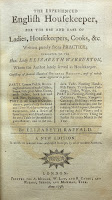
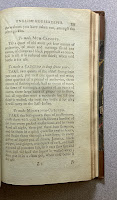
A 1796 edition of Elizabeth Raffald's The Experienced English Housekeeper offers five recipes. The fourth, "catchup that keeps seven years," reads as follows:

"Take two quarts of the oldest strong-beer you can get, put it to one quart of red wine, three quarters of a pound of anchovies, three ounces of shalots peeled; half an ounce of mace, the same of nutmegs; a quarter of an ounce of cloves, three large races of ginger cut in slices, boil all together over a moderate fire till one third is wafted, the next day bottle it for use; it will carry to the East-Indies."

None of Raffald's ketchups make use of tomatoes, a trend that wouldn't emerge for a few more years. It would be nearly another century before tomato ketchup took on the sweeter flavor we're used to today - adding sugar improved the effectiveness of the preservation process.

To read Raffald's other four ketchup recipes, and to sneak a peek at more in The Experienced English Housekeeper, ask for Rare Book TX705 .R33 1796.